
- Thoughts & Little Things
- May 19
- 2 min read
What happens if you touch a butterfly wing?

Someone might have told you to never touch a butterfly's wings or, if you do, the powder rubs off and they can't fly. Have you ever wondered if that's true? What exactly is that magical powdery stuff coating their wings? What we see on the delicate wings of certain butterfly and moth (Lepidoptera) species isn’t a generous sprinkling of fairy dust, but a chitinous material called ‘scales’.
It's not magic or dust!
These scales both look and act like micro roofing tiles. As a matter of fact, the literal meaning of Lepidoptera in Greek is ‘scaly wings’.
So are these like fish scales or something...?

Give me all the scaly details...
The scales on butterfly wings are primarily made of chitin, including their head and abdomen.
What is Chitin?
It's essentially the second most common building material found in nature.
It’s similar to another more commonly known giant molecule made by living things (biopolymer) called keratin. While keratin is a flexible layer of protein formed by amino acids, chitin is a rigid carbohydrate formed by amino sugars. In terms of purpose, both keratin and chitin serve as structural protective barriers for living organisms.
Unlike keratin - which is mostly found in hair, nail, and feathers of vertebrates - Chitin is found mostly in the rigid exoskeletons of insects, crustaceans, and fungi cell walls.
Field Note: To satisfy my curiosity, I did some digging and discovered that fish scales have recently been listed by scientists to contain chitin. Obviously, these two species aren't related, but it points to another example of intentional design!
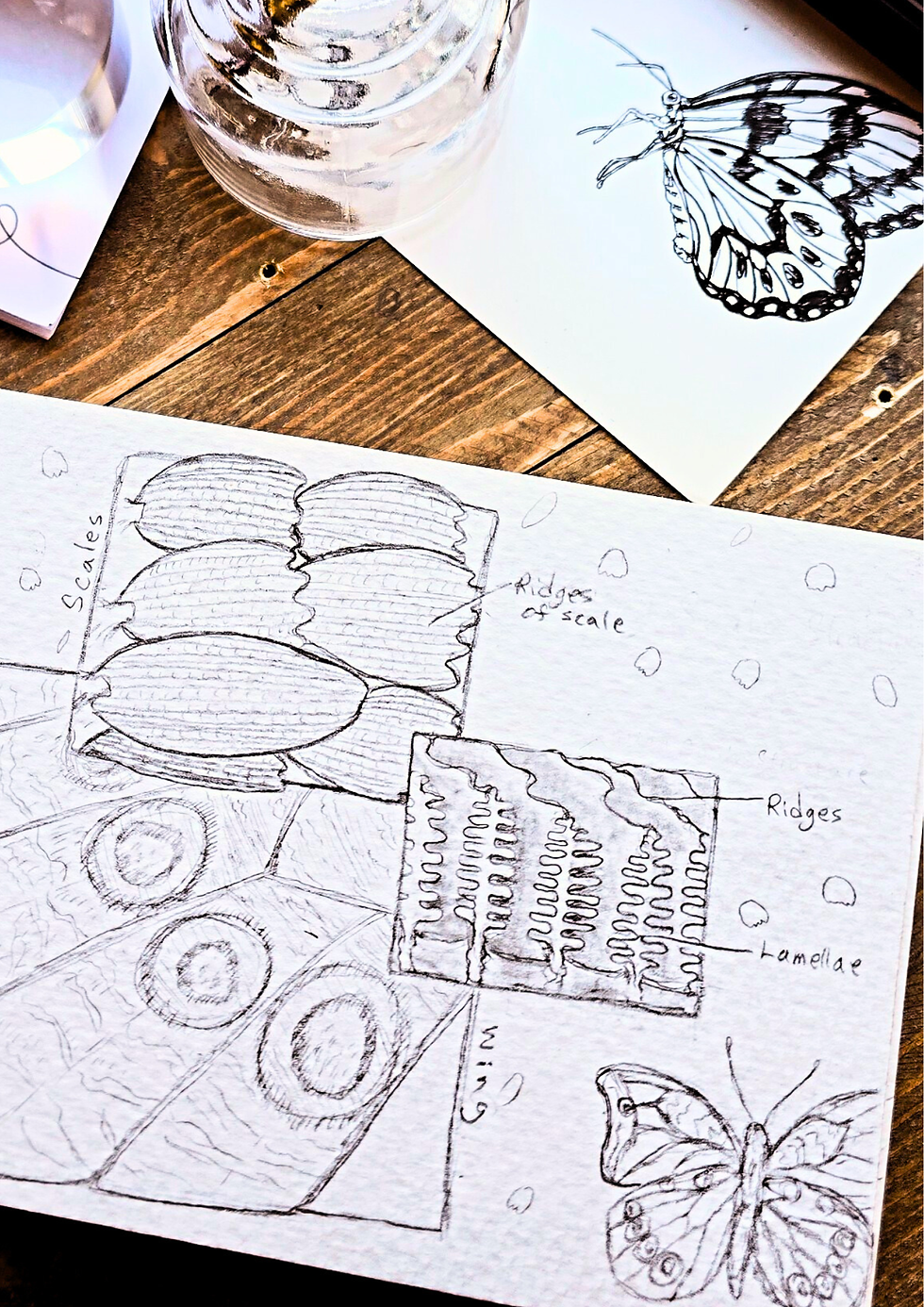
In body armor terms, chitin could be compared to chain mail.
It’s flexible, lightweight, and able to absorb and dissipate significant kinetic energy.
grand design on a small scale
If the purpose of the chitin is protection, and the scales on butterfly wings are made of it, then why do they rub off so easily?
To answer that, let's go back to the original question:
what happens when you touch a butterfly wing and the chitin comes off -
will it never be able to fly again?
It turns out that butterflies don’t need magic dust to fly (gasp)...enter the glass wing butterfly (greta oto). Sure enough, Chitin is made from one of nature’s toughest materials, but their purpose is to provide waterproofing, color (pigment or structural), and flying efficiency. These functions seem insignificant considering the impressive material they’re made of, but as usual in God's creation there's a grand design even in the little things.
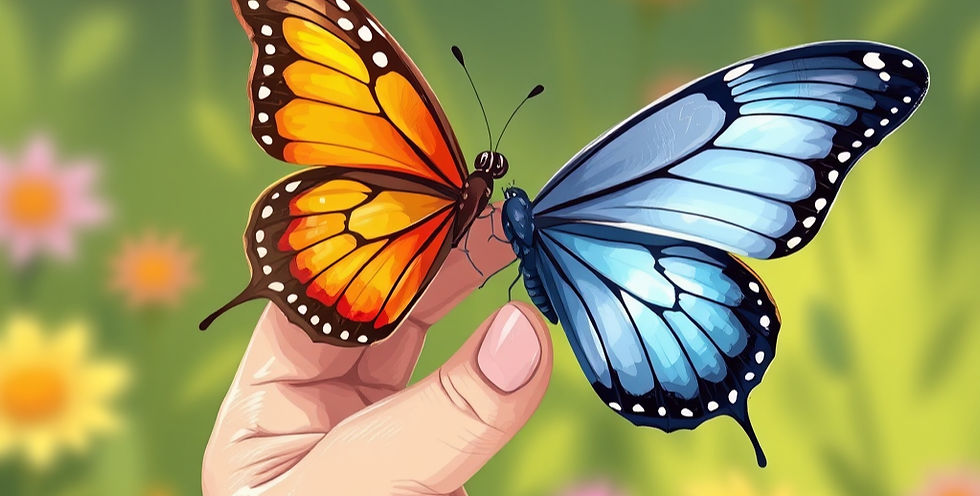
So remember the next time you're holding a butterfly friend, as long as your holding them properly, don't worry about a little powder - excuse me - chitin rubbing off.
More colorful news on butterflies:

Comments